CNC cutting or thermoforming: which process suits your product best? It is a common question once you sit down to design a case, an inner tray or a protective solution for a specific part. At first glance they can look like similar options, but each one answers very different needs. Choosing correctly affects cost, protection, presentation and final production.
At Atienza y Climent we specialise in custom foam cutting and die cutting. We know every process available and here we explain which one works best for your production.
What is the difference between foam die cutting, CNC cutting and thermoforming
All three processes create housings and protect products, but they work in different ways and answer different needs. The main difference between die cutting, CNC cutting and thermoforming lies in how each part is made, the production volume expected, the level of protection required and the final finish you are after.
Some projects call for thousands of identical units, others need constant changes, and others put presentation ahead of protection. That is why the decision is usually made by weighing up the product, the budget and the commercial objective. It is part of any industrial product design process.
What is foam die cutting
Custom die-cut foam is produced with a die that always cuts the same shape. It is normally used once the design is validated and large quantities are going to be produced.
What is CNC foam cutting
CNC foam cutting uses computer-controlled machinery to create custom housings without having to make a die first. It is common for prototypes and short runs.
What is thermoforming for packaging
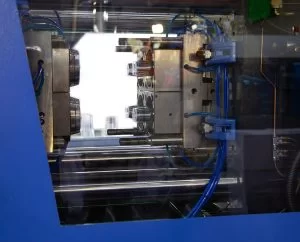
Thermoformed product trays are made by heating a plastic sheet until it takes the shape of a mould. They are widely used in retail packaging and displays.
Quick comparison: when to choose each process
Custom foam inserts often raise questions because there is no single valid solution for every project. It all depends on the product you need to protect, the volume expected and the image you want to convey.
This comparison table makes it clearer:
| Project requirement | Most suitable process |
|---|---|
| Foam insert to protect a product | Foam die cutting or CNC cutting |
| Repeat runs with the same shape | Foam die cutting |
| Prototype or short run | CNC cutting |
| Complex geometry or frequent changes | CNC cutting |
| Rigid or semi-rigid tray | Thermoforming |
| Packaging with visible cavities | Thermoforming |
| Premium case with protective finish | Die-cut or CNC foam |
| Kit with several parts | Custom foam or thermoforming, depending on the product |
| Fragile or delicate product | Custom technical foam |
| Retail presentation tray | Thermoforming |
In applications such as collectibles, premium cases, toys, technical parts, commercial samples or promotional kits, foam usually offers a clear advantage because it protects the contents better and lets every housing match the real shape of the product.
When to choose foam die cutting
Foam cutting for cases by die cutting normally makes sense once the design is settled and a high number of identical units is needed.
Once the die is made, the process is fast and repeatable. That is why it is common in stable campaigns or projects that keep exactly the same configuration throughout production.
Advantages of foam die cutting
When volume is high, it offers real benefits:
- Lower unit cost.
- Fast production.
- High repeatability.
- Consistent finish.
Limitations of foam die cutting
It also comes with a few constraints worth weighing up:
- A die has to be manufactured.
- Changes add extra cost.
- Less flexible during development.
- Not advisable for early testing.
When to choose CNC foam cutting
Product protection solutions based on CNC are normally used when the project may still change or when the volume does not justify making a die.
It is a technology well suited to development stages, because it lets you test designs, adjust dimensions and validate housings before moving to final production.
Advantages of CNC cutting
It is a very flexible option for many projects:
- No die required.
- Quick changes.
- Ideal for prototypes.
- Handles complex geometries well.
Limitations of CNC cutting
In certain scenarios it can be less competitive:
- Slower production.
- Higher cost on large runs.
- Lower profitability at very high volumes.
- Longer machining times.
When to choose thermoforming for packaging
Foam part manufacturing and thermoforming share some uses, but they answer different needs. Thermoforming is normally used when visual presentation carries a lot of weight or when you want the product to stay visible inside the packaging. It is frequent in displays, retail trays and products destined for retail.
Advantages of thermoforming
It has several strong points:
- Very good visual presentation.
- Clean finish.
- The product can be displayed.
- Cost-effective on large production runs.
Limitations of thermoforming
It also has some limitations compared with foam:
- Lower impact absorption.
- A mould is required.
- Less adaptable to changes.
- More limited protection for delicate parts.
Foam or thermoforming: what works best to protect a delicate product
Technical packaging design should always start from a simple question: what does the product need in order to arrive in perfect condition?
When we are talking about painted figures, miniatures, electronic components, collectibles or sensitive parts, foam is usually the safest option because it absorbs impacts better and keeps every element immobilised.
Thermoforming can work perfectly well when the main goal is to present the product or keep it visible. However, when protection is the priority, foam usually delivers better results.
Which process to choose based on volume, cost and finish
Industrial packaging foam and thermoforming answer different needs. There is no universal solution because every project has its own production, protection and presentation requirements.
Before deciding, it is worth looking at how many units will be produced, whether the design is validated and how much the commercial image of the product matters.
If you need few units or you are validating the design
In this case CNC cutting is the best option: it allows changes without having to make specific tooling and makes validating the project easier.
If you need many identical units
Die cutting is the best option for solid interior packaging protection, and the more competitive one when large quantities are produced with the same geometry.
If you are after premium presentation
Foam cutting for cases helps create custom housings that give the whole set a more polished, organised look.
If you need technical protection
Good custom technical packaging must put the safety of the product first. In these cases foam is usually one of the most widely used alternatives.
How Atienza y Climent decides which process suits each project
The differences between die cutting and CNC cutting matter, but the choice should never be made on process alone. At Atienza y Climent we start by looking at the product, the expected volume, the level of protection needed, the type of case and the commercial objective. From there we assess which solution fits best in each case.
We work on projects for toys, technical parts, promotional kits, premium packaging and part-work collections. That lets us look at every requirement from a practical angle and pick the best alternative for each production run. We can also integrate these solutions into complete custom collectibles manufacturing projects.
Got a project? Let us quote it for you
Frequently asked questions about foam die cutting, CNC cutting and thermoforming
It depends on the production volume. CNC cutting is usually the better option for prototypes and short runs, while die cutting becomes more cost-effective when many identical units are going to be produced.
It is normally used when visual presentation carries a lot of weight, when the product needs to stay visible, or when working with large quantities of identical units.
Yes. In most cases foam offers superior protection against impacts, vibration and movement. That is why it is normally used for delicate products, collectibles and technical parts.
It depends on the goal of the project. If protection and a careful presentation are the priority, custom foam is usually the most widely used option. If the aim is to display the product, thermoforming can be a better fit.
Yes. In fact it is common practice on many projects. It lets you check dimensions, fit and housings before starting final manufacturing, and it avoids problems during production.